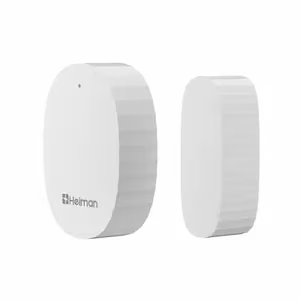
- Detection range
- 20 mm
- Power supply
- DC3 V (Lithium Battery)
- Wireless protocol
- Matter, Zigbee
Price on request
4 products
Price on request
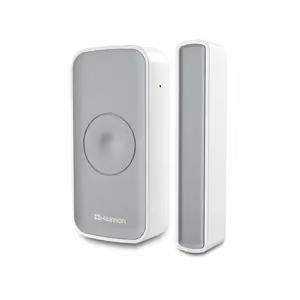
Price on request
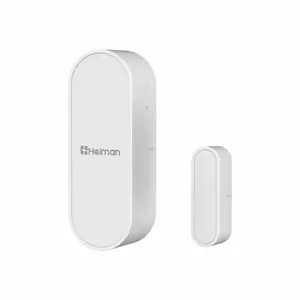
Price on request
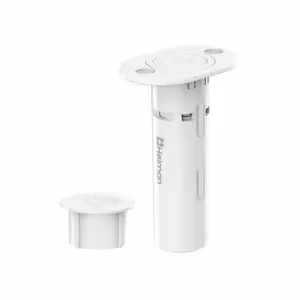
Price on request
Delivery, installation, setup and warranty service from LAGI.
Describe the property and what needs protecting. We will send you the cost of equipment and installation.
Smart Door/Window Sensors (Magnetic Contact Sensors) are wireless IoT devices that detect door and window opening-closing using magnetic contact and instantly send notifications to your smartphone, create automation scenarios (lighting activation, alarm triggering) and integrate with smart home ecosystems (Alexa, Google Home, HomeKit) in Tbilisi and throughout Georgia. These sensors provide security (unauthorized entry notification), energy efficiency (HVAC shutoff when window opens), comfort (automatic lighting when door opens) and monitoring (children's room door opening history), making them ideal for residential houses, apartments, offices, shops and any type of facilities where door/window status monitoring is needed. LAGI offers full range of smart door sensors: Wi-Fi sensors (direct router connection, no hub needed), Zigbee sensors (low power consumption, mesh network, hub required), Z-Wave sensors (900MHz frequency, long range), mini sensors (10x30mm, invisible installation), battery sensors (CR2032, 1-2 year lifespan), solar powered sensors (no battery replacement needed), temperature sensor models (door sensor + temperature/humidity). All sensors compatible with Alexa, Google Home, HomeKit, Home Assistant ecosystems.
Smart door sensor consists of two parts: 1) main module – contains electronics, battery, wireless transmitter (Wi-Fi/Zigbee/Z-Wave), reed switch sensor. 2) magnet – small magnet that creates magnetic field. How it works: main module installed on door frame, magnet installed on moving door part. When door closed, magnet is next to main module (5-20mm distance) and reed switch is closed. When door opens, magnet moves away, magnetic field disappears, reed switch opens and sensor detects opening. Sensor instantly sends signal to hub or directly via Wi-Fi, hub sends notification to your smartphone and executes automation scenarios (e.g. turns on lighting). Battery life: 1-2 years (depends on opening frequency).
Wi-Fi sensors – direct Wi-Fi router connection (2.4GHz), no hub needed, simple setup, but higher power consumption (battery 6-12 months), limited quantity (10-20 sensors), ideal for small homes. Zigbee sensors – low power consumption (battery 1-2 years), mesh network (sensors amplify each other), hub required (Zigbee hub/gateway), unlimited quantity (100+ sensors), ideal for large homes, multiple sensors. Z-Wave sensors – 900MHz frequency (less Wi-Fi interference), long range 30-100m, mesh network, hub required, more expensive, ideal for professional installations. Recommendation: Wi-Fi – 1-5 sensors, simple setup. Zigbee – 10+ sensors, energy efficiency. Z-Wave – professional systems.
Smart door sensors allow creating multiple automation scenarios: 1) security – smartphone notification when door opens in your absence, alarm activation, camera recording start. 2) automatic lighting – lighting on when entrance door opens at night, lighting off when all doors closed. 3) energy efficiency – HVAC shutoff when window opens, notification "window open more than 10 minutes". 4) comfort – music on when entrance door opens, "welcome home" message. 5) monitoring – children's room door opening history, garage door status check. 6) scenarios – "good night" scenario (check all doors/windows closed, if not → notification). All scenarios created in smartphone app or Alexa/Google Home.