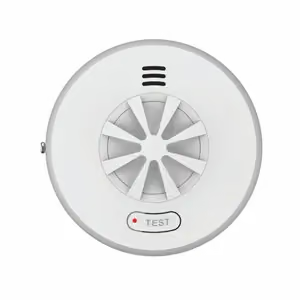
- Sensor type
- Thermistor
- Sensor life
- 10 years
- Power supply
- Power supply: DC3 V (Lithium Battery); Power supply mode: 10 years Battery Built-in
Price on request
2 products
Price on request
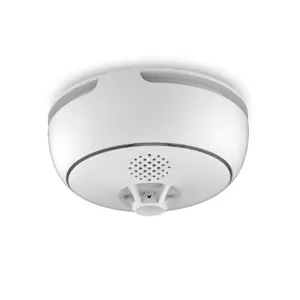
Price on request
Delivery, installation, setup and warranty service from LAGI.
Describe the property and what needs protecting. We will send you the cost of equipment and installation.
Heat Detectors (Heat Alarms / Thermal Detectors) are specialized components of fire alarm systems that detect fire based on rapid temperature rise or reaching fixed threshold in Tbilisi and throughout Georgia. These devices don't react to smoke, steam, or dust, making them ideal for kitchens, bathrooms, garages, warehouses, and other locations where smoke detectors cause false alarms, ensure reliable fire detection in extreme conditions, and reduce false alarm count by 90%. LAGI offers full range of heat detectors: fixed temperature detectors (57°C/68°C/88°C threshold, cheap, ideal for standard rooms), Rate-of-Rise (ROR) detectors (detect rapid temperature rise 8-10°C/min, faster response), combination detectors (fixed + ROR, maximum accuracy), addressable heat detectors (unique ID), conventional heat detectors (zone system), explosion-proof detectors (ATEX, Ex d IIC, for fuel warehouses), IP67/IP68 weatherproof models (for outdoor use). All detectors comply with European standard EN 54-5.
Smoke detectors – detect smoke particles in air, faster response (several minutes earlier), ideal for living rooms, bedrooms, corridors, but cause false alarms in kitchen (cooking), bathroom (steam), garage (dust). Heat detectors – detect temperature rise, don't react to smoke/steam/dust, slower response (several minutes later), ideal for kitchens, bathrooms, garages, warehouses. Recommendation: smoke detectors – bedrooms, corridors. Heat detectors – kitchen, bathroom, garage. Combination – best protection.
Rate-of-Rise (ROR) is function that detects rapid temperature rise over time. How it works: detector measures temperature every second and calculates rise rate. If temperature rises more than 8-10°C/min, detector triggers even if temperature hasn't reached fixed threshold (e.g. 57°C). This provides faster response than fixed temperature detectors. Example: room temperature 20°C → fire starts → temperature rises 20°C → 35°C → 50°C (in 30 seconds) → ROR detector triggers at 50°C, fixed detector triggers at 57°C (10 seconds later).
Heat detectors are recommended for locations where smoke detectors cause false alarms: 1) kitchen – cooking produces smoke/steam, heat detector doesn't react. 2) bathroom – hot water steam causes false alarm in smoke detector. 3) garage – dust, car exhaust, heat detector more reliable. 4) warehouse – dusty environment, heat detector doesn't react to dust. 5) attic/basement – high humidity, temperature fluctuations. 6) industrial facilities – welding, cutting, dusty processes. Important: heat detectors should not be used in bedrooms – use smoke detectors.