How to install a gas detector and where to put smoke detectors
Where to mount natural gas and LPG detectors, when you need a shut-off valve, where smoke and carbon monoxide detectors go, and how to test them.
8 min read
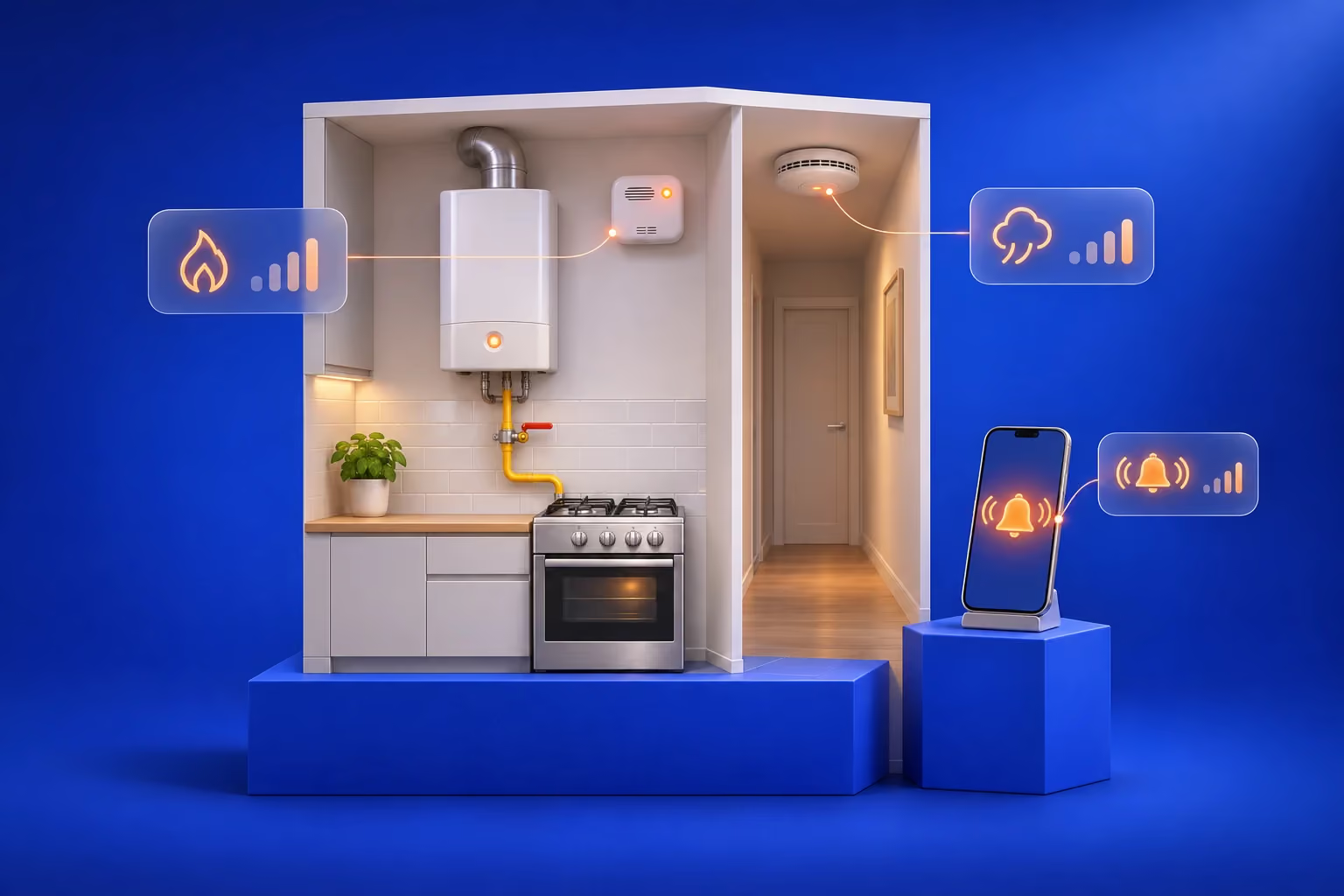
A natural gas detector is installed high on the wall or on the ceiling in the room with the gas appliance, while a detector for bottled LPG goes low, close to the floor. Smoke detectors go on the ceiling in the hallway, in bedrooms and on every floor, and a boiler, gas water heater or fireplace also needs its own carbon monoxide detector. Below we explain how to choose a gas leak detector, exactly where to mount it, how a shut-off valve is connected and which installation mistakes cause false alarms.
Which gas leak detector to choose
Every detector is designed for a specific gas, so that is the first thing to find out. The mains supply in Tbilisi is natural gas, which is mostly methane (CH4). A house with a gas bottle uses liquefied petroleum gas, a mix of propane and butane (LPG). The gas type is listed in the specifications of each model, and some detectors sense both.
After that, the choice depends on who needs to know about the alarm.
- A standalone detector sounds a siren and flashes a light. It runs on mains power and works without a control panel or internet, but only people nearby will hear it.
- A detector with a shut-off valve signals a solenoid valve when it goes off, and the valve cuts the gas. This kit suits places where people are not always around: a boiler room, a country house, an apartment that is empty during the day.
- A smart detector with Wi-Fi or Zigbee sends the alarm to your phone. It is the one to choose when you need to know about a leak while away from home.
Standalone models, including those with a valve output, are in our gas leak detectors section, and models with an app are among the smart gas detectors.
Where to install a gas detector
The position depends on whether the gas is lighter or heavier than air. Methane is lighter and collects under the ceiling during a leak, so a natural gas detector goes high on the wall or on the ceiling. Propane and butane are heavier and sink to the floor, so an LPG detector is mounted low on the wall. The exact distance from the ceiling or floor and from the appliance is given in the model's manual, and it is worth following: a detector at the wrong height senses gas later.
Each room with a gas appliance needs its own detector. If the boiler is in a boiler room and the cooker is in the kitchen, one detector cannot cover both rooms.
Where not to put a gas detector:
- directly above the cooker or next to the extractor hood, where steam and grease settle on the sensor and cause false alarms;
- near a window, door or air vent, where draughts carry the gas past the detector;
- behind a cupboard or curtain or in a recess, where the air stays still;
- next to a sink or in a bathroom, where moisture shortens the sensor's life.
How to install a gas detector step by step
- Find out which gas you have: natural gas from the mains or LPG from a bottle.
- Mark the position using the rules above and check the distance to the appliance in the manual.
- Plan the power supply. Most detectors run on 100–240 V mains, so you need a socket or a cable from the consumer unit nearby.
- Fix the base to the wall with wall plugs and connect the detector.
- Wait for the sensor to reach its working mode; the manual says how long this takes after switching on.
- Press the test button and check that the siren and light work. With a smart detector, check that the alarm reaches your phone.
Do not test a detector with gas from a lighter or an unlit burner: it is easy to create a dangerous concentration that way. The test button is there for checks, and an engineer tests the sensor's response to gas with a can of test gas.
Gas detector with a shut-off valve
A siren warns people, but the gas keeps flowing. A shut-off valve deals with that: it is a solenoid valve fitted to the gas pipe ahead of the appliance. When the detector goes off, it signals the valve, the valve closes and the gas stops. Such a valve is usually reopened by hand once the cause of the leak has been found and the room has been aired.
The valve is chosen to match the pipe diameter and the signal the detector gives. Cutting into the gas pipe is a job for a gas engineer, while we connect the detector to the valve and test the whole chain as part of installing the detector.
Where to put smoke detectors
Smoke rises and spreads under the ceiling, so a smoke detector goes on the ceiling, towards the centre of the room. In the corner where the wall meets the ceiling the air barely moves, and smoke reaches it last.
- As a minimum, put one detector in the hallway outside the bedrooms and one in each bedroom. In a house with several floors, add one on every floor, including above the stairs.
- A living room, study or nursery needs one too if devices there run unattended for long periods: a heater, chargers, a TV.
- Smoke detectors do not go in the kitchen or bathroom, where steam and cooking fumes trigger false alarms. A heat detector suits the kitchen: it reacts to rising temperature, not to smoke.
- Keep the detector away from light fittings, air conditioners and air vents, because the airflow pushes the smoke away.
Apartments and private houses usually get standalone smoke detectors, each with its own battery and siren. In offices, shops and warehouses the detectors are wired to a control panel, which makes it a fire alarm system. We explain how such systems differ in our article addressable or conventional fire alarm.
Carbon monoxide detectors near boilers and water heaters
A combustible gas detector does not notice carbon monoxide (CO). CO forms when gas, wood or coal burns without enough air: in a boiler with poor draught, in a gas water heater, in a fireplace. It has no colour and no smell, and in a closed room even a small concentration is dangerous. That is why a room with a boiler, water heater or fireplace gets a separate carbon monoxide detector, and if a bedroom is next to it, another one goes there.
Carbon monoxide weighs about the same as air and mixes with it, so its detector goes where the model's manual says: most often on the wall at breathing height, or on the ceiling. Combined smoke and CO detectors also exist, one device instead of two in the hallway outside the bedrooms.
Testing and maintenance
Press the test button on every detector once a month. In standalone smoke detectors, replace the battery once a year unless it is sealed in for the whole service life, and blow the dust off the grille. Every sensor has its own service life, stated in the manual; when it runs out, the whole detector is replaced.
If a gas detector goes off, do not switch lights or appliances on or off: turn off the gas, open the windows, leave the room and call the gas emergency service.
Gas and smoke detector installation by LAGI
LAGI chooses the position of each detector, connects shut-off valves and tests the alarms as part of our fire alarm installation service, and we connect smart detectors to the app and smart home scenarios. The engineer checks on site where the boiler, cooker and water heater are, which gas you have and where people sleep, and proposes a layout. Site surveys in Tbilisi are free. To arrange a visit, send a quote request.
Frequently asked questions
At what height should a gas detector be installed?
A natural gas detector goes high on the wall, close to the ceiling, or on the ceiling itself, because methane is lighter than air and collects at the top. A detector for bottled LPG goes low, near the floor, because propane and butane are heavier than air. The exact distance from the ceiling or floor and from the appliance comes from the manual of the specific model.
Can one gas detector cover a whole apartment?
No, not if the gas appliances are in different rooms. A detector only senses gas close to itself, so every room with a boiler, cooker or water heater needs one. If the cooker and boiler are in the same kitchen, one detector is usually enough, placed between them as the manual describes and not above the cooker.
Do you need a smoke detector in the kitchen?
An ordinary smoke detector is best kept out of the kitchen: steam, fumes from a frying pan and the toaster cause false alarms, and sooner or later such a detector gets switched off. The kitchen gets a heat detector, which reacts to a fast rise in temperature, and a gas detector if the cooker runs on gas. The smoke detector goes in the hallway next to the kitchen.
What is the difference between a carbon monoxide detector and a gas detector?
A gas detector notices a leak of combustible gas, methane or propane and butane, before it becomes dangerous. A carbon monoxide detector reacts to CO, which forms when a boiler, water heater or fireplace burns badly. These are different sensors and one device does not replace the other, so both are installed near boilers and water heaters.