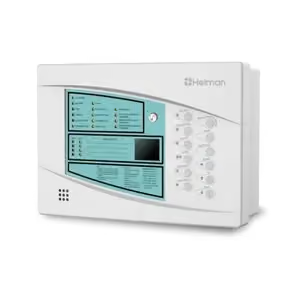
- Power supply
- AC220 V±15%/50 Hz
- Dimensions
- 300 × 210 × 100 mm
- Zones
- 2 zones / 4 zones
Price on request
3 products
Price on request
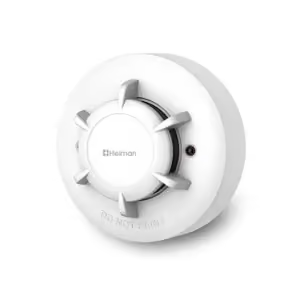
Price on request
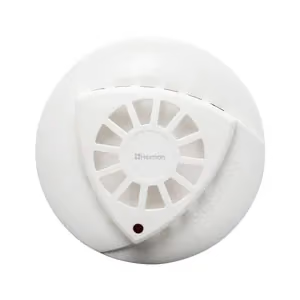
Price on request
Delivery, installation, setup and warranty service from LAGI.
Describe the property and what needs protecting. We will send you the cost of equipment and installation.
Conventional Fire Alarm Systems are classic and reliable fire protection systems where detectors are grouped into zones and fire panel shows which zone has fire in Tbilisi and throughout Georgia. These systems use 4-wire hardwired connection, don't require complex programming, and provide reliable fire detection at economical price, making them ideal for small and medium-sized buildings, offices, shops, factories, residential houses, and any type of facilities where precise detector-level localization is not required. LAGI offers full range of conventional fire systems: conventional fire panels (4-32 zones, LCD/LED indicators, built-in battery), conventional smoke detectors (optical/ionization, 4-wire connection), conventional heat detectors (fixed/ROR), conventional Manual Call Points (Break Glass buttons), zone modules (zone expansion), sirens and strobes (audible/visual alarm), power supplies (24V DC, battery charger), End-of-Line (EOL) resistors (line monitoring), integration with other systems (ventilation, elevator, doors). All systems comply with European standards EN 54.
Conventional systems – detectors grouped into zones (e.g. "Zone 3 - 3rd floor"), panel shows only zone, not exact detector, 4-wire cabling (2 wire power + 2 wire signal), cheaper, simple installation, ideal for small/medium buildings (4-32 zones). Addressable systems – each detector has unique ID, panel shows exact detector (e.g. "Detector #47"), 2-wire Loop cabling, more expensive, complex programming, ideal for large buildings (128-512 addresses). Recommendation: conventional – small offices, shops, residential houses. Addressable – hotels, hospitals, shopping centers.
Zone is group of detectors representing specific area in building. How it works: all detectors in one zone connect to one 4-wire cable that goes to zone terminal on panel. When any detector in this zone triggers, panel shows "Zone 3 alarm", but doesn't know which specific detector. Zone planning: 1) geographical – one zone = one floor or one wing. 2) functional – one zone = one type of space (e.g. all bedrooms). 3) size – one zone maximum 20-30 detectors, maximum 2000m² area. Example: 3-floor building → Zone 1 (1st floor), Zone 2 (2nd floor), Zone 3 (3rd floor), Zone 4 (basement).
EOL (End-of-Line) resistor is small resistor (usually 4.7kΩ or 10kΩ) installed in last detector of zone in conventional fire systems. Why needed: EOL resistor allows panel to monitor zone cable integrity. How it works: panel sends small current into zone cable and measures resistance. 1) normal state – panel sees EOL resistor → zone OK. 2) fire – detector closes contact → resistance changes → panel shows "Zone 3 alarm". 3) cable break – EOL resistor not visible → panel shows "Zone 3 fault". 4) short-circuit – resistance very low → panel shows "Zone 3 short-circuit". This ensures system always works and is not damaged.