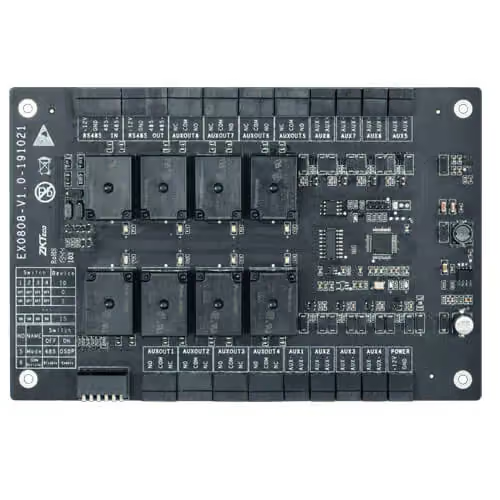
- Communication interfaces
- RS485 and OSDP (version 2.1.7)
- Dimensions
- 160mm * 106mm (6.29in * 4.17in) (L*W)
- Power supply
- 12V DC 300mA
Price on request
3 products
Price on request
Price on request
ZKTeco
9537
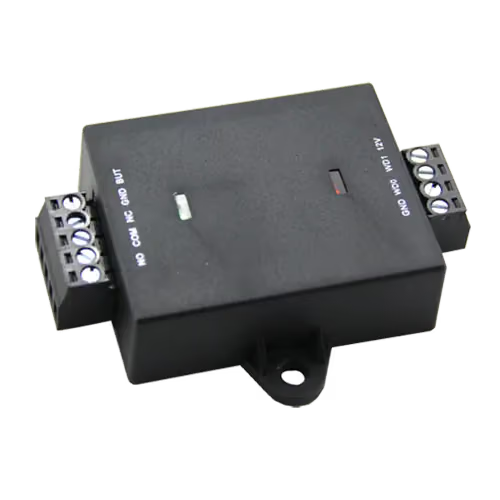
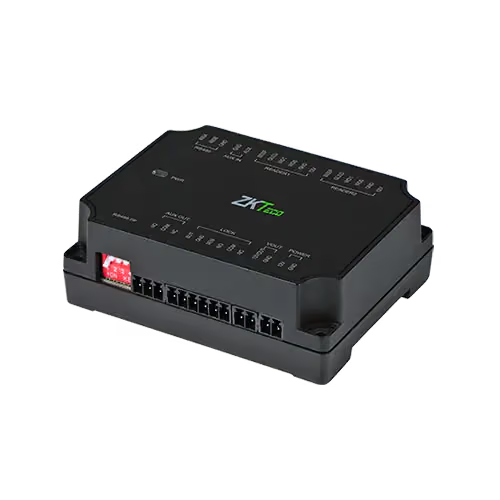
Lock control module for ZKTeco access control devices with RS485: no user data is stored in the module, and the lock and exit button are wired to the module.
Price on request
Delivery, installation, setup and warranty service from LAGI.
Describe the property and what needs protecting. We will send you the cost of equipment and installation.
Electrical Relays are switching devices for access control systems that provide safe management of electronic locks, barriers, and other high-power devices in Tbilisi and throughout Georgia. These relays protect access controller from overloads and electrical noise – controller sends low-power signal to relay, relay switches high-power current to lock. LAGI offers electrical relays with full functionality: 12V/24V DC power, 1-4 channel models, NO/NC contacts (Normally Open/Closed), 5A-10A switching power, LED indicator (relay status), DIN Rail mounting, manual override button, overload protection, integration with access controllers. All models comply with CE and RoHS standards.
Relay needed for several reasons: controller protection – access controller output is low power (100-200mA), electronic locks require high current (1-3A), if directly connect lock to controller – controller will burn. Electrical noise isolation – electronic locks create electrical noise (EMI), relay isolates controller from this noise. Multiple lock management – with one controller output can manage multiple locks through relays. Fail-Safe/Fail-Secure – relay allows changing lock logic.
NO (Normally Open) contacts – normally open, when relay off contacts open (no connection), when relay turns on contacts close (connection appears). Used for Fail-Secure locks – during power outage lock is closed. NC (Normally Closed) contacts – normally closed, when relay off contacts closed (connection exists), when relay turns on contacts open (connection breaks). Used for Fail-Safe locks – during power outage lock is open (fire safety).
Relay connection: controller output → relay input – connect controller Relay Output (usually NO/COM terminals) to relay coil (Coil Input, usually + and - terminals). Power supply → relay – connect 12V/24V DC power supply to relay (in some models power comes from controller). Relay output → electronic lock – connect relay NO/NC contacts to electronic lock and power supply. When controller sends signal (card read) → relay turns on → lock opens.